
This article is part of ASF’s 2025 annual report
Access to remedy for business-related human rights abuses is essential to ensuring that economic development respects the rights and dignity of affected communities. In Uganda and Tanzania, however, access to justice remains hindered by structural and procedural barriers, including lengthy judicial processes, limited legal awareness, weak enforcement mechanisms and unequal power dynamics between corporations and local communities.
These challenges have become increasingly visible in the context of large-scale development of extractive projects, including major agricultural investments and infrastructure initiatives such as the East African Crude Oil Pipeline (EACOP). While Grievance Redress Mechanisms (GRMs) are often promoted as tools to address harm and prevent conflict, many remain inaccessible, ineffective or poorly trusted by the communities they are intended to serve.
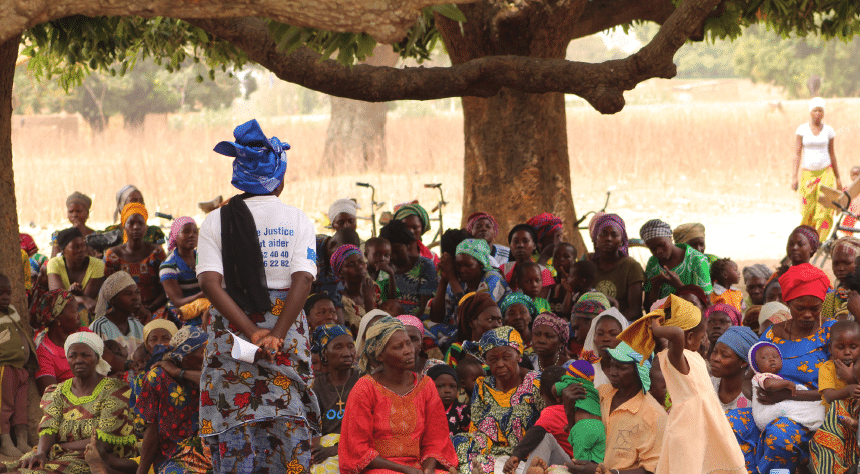
Through the programmes Empowering Civil Society for Inclusive Development and Empowered Tanzanian Civil Society for Fostered Justice & Human Rights in Natural Resource Governance, Avocats Sans Frontières (ASF) continued to support stronger and more rights-compatible remedy systems in both countries.
ASF worked alongside civil society organisations, communities and justice actors to strengthen legal
empowerment, improve access to legal aid and advocate for more accountable governance frameworks.
ASF’s interventions focused particularly on helping affected communities navigate grievance mechanisms and claim their rights effectively. This work was complemented by advocacy efforts at both national and regional levels, including ASF’s participation in the 4th African Business and Human Rights Forum held in Lusaka, Zambia, in October 2025.
Together with partners including the Global Compact Network Kenya (GCNK), the Network of African
National Human Rights Institutions (NANHRI) and the Danish Institute for Human Rights (DIHR), ASF
facilitated discussions between businesses, public authorities and civil society representatives on how
grievance mechanisms can better deliver effective remedies for affected populations.
The discussions highlighted a persistent gap between formal grievance policies and their practical implementation. While many companies have adopted grievance procedures, few mechanisms fully meet the effectiveness criteria established by the United Nations Guiding Principles on Business and Human Rights, including accessibility, transparency, predictability, equity and rights-compatibility.
Our recommendations:
- designing grievance mechanisms in collaboration
with affected communities to ensure they are accessible, inclusive and context-sensitive; - integrating grievance systems within national policy and administrative frameworks to strengthen
oversight and accountability; - and increasing technical support and peer learning opportunities for businesses and institutions
seeking to implement rights-compatible grievance mechanisms.
Through this regional work, ASF continues to promote accountability and strengthen communities’ ability to access effective remedies when their rights are affected by business activities.