General context
With a population of around 111,000,000, the Democratic Republic of the Congo (DRC) is the second-biggest country in Africa. Despite elections in 2006 and 2011, which were considered democratic by the international community, DRC is struggling to end the cycle of conflict. Insecurity persists in the east, where it has been maintained for more than ten years by different armed groups, which have committed serious and massive human rights violations. Fuelled by extractive activities, the illegal trade in natural resources, and endemic corruption, these conflicts have left the population in a permanent climate of instability, which has led to a serious humanitarian crisis. The conflicts and violence have spread to other provinces in the country, including Kasai Province, which has seen large-scale violence since mid-2016. In 2025, the conflict has escalated: armed groups, notably the M23, have launched offensives, including capturing Goma and Bukavu, further displacing civilians and worsening the humanitarian crisis.
After the end of 2016, the DRC has been undergoing a political crisis due to the former President Kabila remaining as head of state despite his second and final term coming to an end. Peaceful demonstrations demanding democratic change have been frequently and violently repressed by the police, the army, and the intelligence services, who carried out many arrests and kidnappings in a severe restriction of the people’s democratic freedoms.
This tense climate was made worse by a very unstable economic and social situation. DRC has been hit hard by the impact of the international economic crisis on the prices of primary materials, including mining and logging resources, the country’s main sources of economic development.
Politically, tensions have recently arisen regarding executive power, human rights, and the use of emergency or siege powers. President Félix Tshisekedi, now in his second term, has been urged by civil society and international organisations to address abuses, arbitrary detention, and to restore democratic freedoms.
The condition of justice
Despite many efforts to address the issue, people still face major obstacles in terms of access to justice. The national conference on justice held in 2015 highlighted the many challenges of an institutional and structural, material, financial, and even sociological nature, which the national policy for justice reform adopted in May 2017 is intended to address.
Nonetheless, the budget allocated to justice is currently still far too limited, which means that the provision of justice is weak and dysfunctional. Considering the country’s immense size, geographic coverage is a key issue. Access to a lawyer, moreover, is not guaranteed. In the absence of a functional and subsidised legal aid system, the cost of a lawyer’s services is still unaffordable for most people. Moreover, most lawyers are based in big urban areas, so the majority of Congolese people have no access to their services.
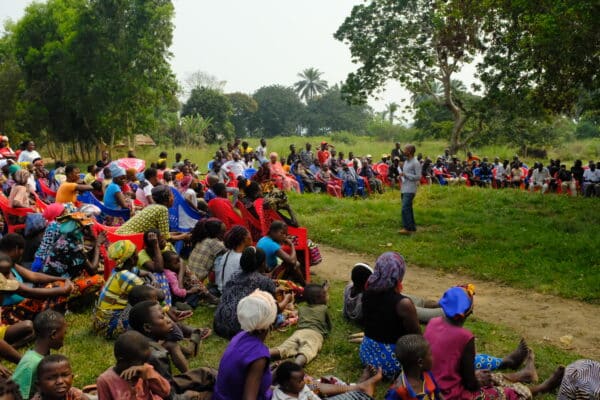
Finally, there is a lack of knowledge among the people about their rights and the means of exercising them, especially in rural areas. They also express a growing mistrust of judicial institutions, due to the latent corruption of the people who work in them, the low rate of implementation of decisions, and the high economic and social cost of legal procedures. As a result, most citizens continue to turn to traditional authorities to resolve their conflicts.