
Ondergefinancierde justitie
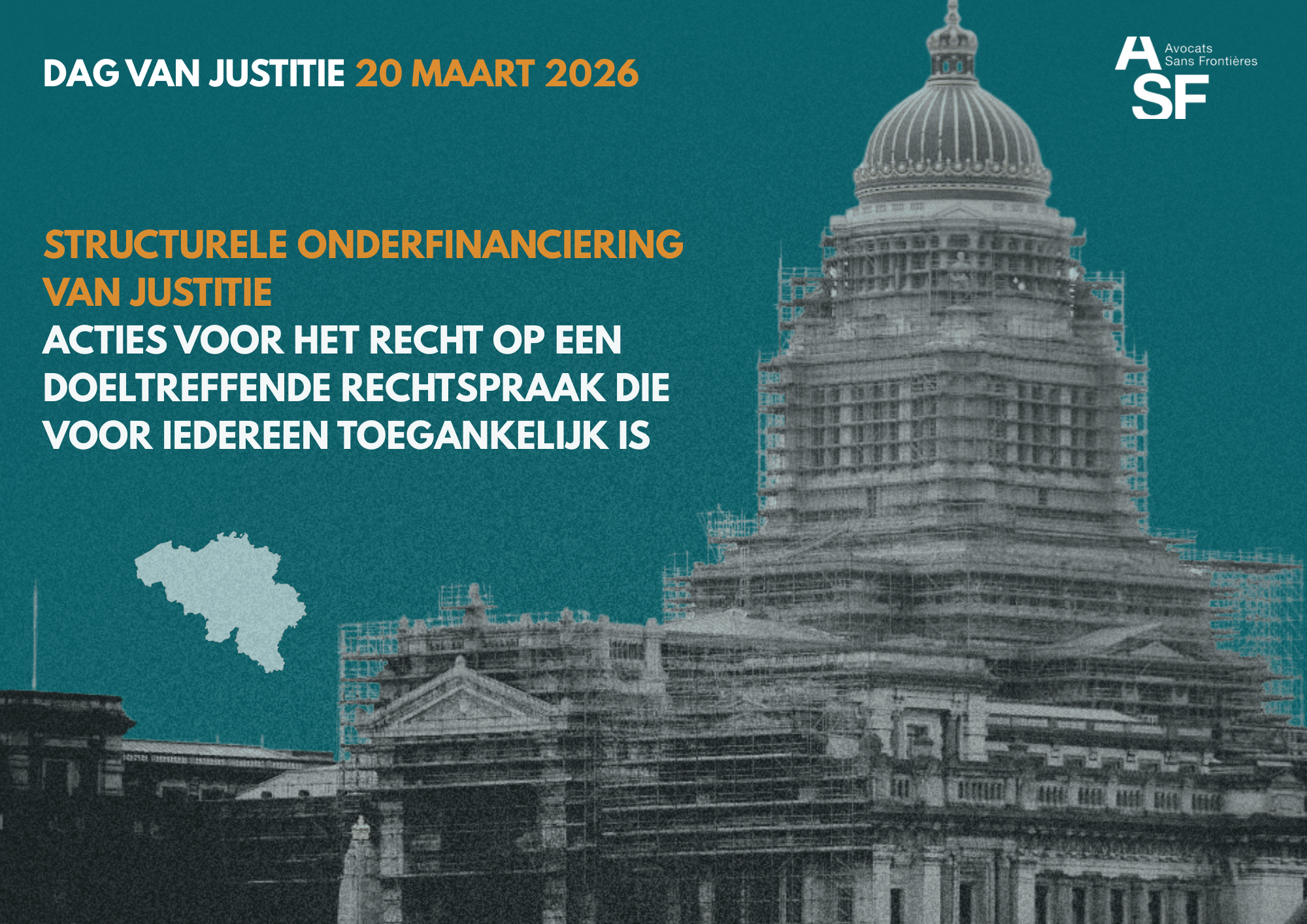
Sinds 2015 trekken advocaten, magistraten, griffiers en alle andere actoren in de justitiële sector op 20 maart aan de alarmbel. Ze stellen de structurele onderfinanciering van de Belgische justitie aan de kaak, evenals de gevolgen ervan voor de toegang tot de rechtspraak en het recht op een snel en eerlijk proces voor rechtzoekenden.
Justitie vertegenwoordigt vandaag de dag slechts 0,22% van de federale staatsbegroting, ver onder het budget voor defensie of de steun aan bedrijven (de financiering van die laatste is maar liefst tachtig keer hoger dan het budget dat aan justitie wordt toegekend).
Al decennialang kiest de politiek ervoor om het rechtssysteem niet de middelen te geven die nodig zijn om zijn taken te vervullen, terwijl justitie toch een essentiële rol speelt om de cohesie in een samenleving te garanderen en als tegenwicht in een democratische rechtsstaat.
Rechtzoekenden, advocaten, magistraten, griffiers: allen slachtoffers van deze politieke keuze
Veel gerechtsgebouwen in België zijn in lamentabele staat, verschillende gevangenissen zijn onbewoonbaar, er heerst een chronische overbevolkingscrisis in de gevangenissen, de digitalisering van de justitie verloopt tergend traag, gerechtelijke achterstanden stapelen zich op door een gebrek aan personeel, enzovoort.
De gevolgen hiervan blijven uiteraard niet uit. Als de rechtbanken te kampen hebben met een tekort aan personeel, de griffies overbelast zijn of de infrastructuur in slechte staat verkeert, worden alle actoren binnen de justitie gedwongen om onder druk te werken in schandalige omstandigheden.
Ook rechtzoekenden zijn er de dupe van: ^procedures die eindeloos aanslepen, beslissingen die te laat worden genomen, moeilijkheden om toegang te krijgen tot informatie en juridische bijstand. Een rechtssysteem dat te log is of te complex wordt om in te schakelen, is niet langer een volwaardig rechtssysteem. Het ondermijnt het vertrouwen van de burgers in de instellingen en verzwakt de rechtsstaat.
De kwestie van de toegang tot rechtspraak is des te crucialer voor mensen in kwetsbare situaties. Voor degenen die over weinig financiële middelen beschikken, beperkte kennis hebben van hun rechten of geconfronteerd worden met complexe administratieve of sociale situaties, zijn effectieve toegang tot een advocaat, betrouwbare juridische informatie en begrijpelijke procedures onontbeerlijk. Bezuinigingen en opeenvolgende hervormingen hebben er echter voor gezorgd dat essentiële mechanismen werden verzwakt, onder andere de rechtsbijstand – die nochtans noodzakelijk is om gelijkheid voor de wet te garanderen.
Een goed functionerende rechtspraak is onmisbaar voor een democratische rechtsstaat
In een rechtsstaat mag justitie niet worden gezien als een van de vele uitgaven, maar moet die worden beschouwd als een fundamentele investering in de democratie. Een onafhankelijke, doeltreffende en toegankelijke rechtspraak is een van de pijlers die het mogelijk maken de grondrechten te waarborgen, conflicten vreedzaam op te lossen en toezicht te houden op het optreden van de overheid.
Op deze Dag van de Justitie is het dan ook essentieel om eraan te herinneren dat de werking van het rechtssysteem de hele samenleving aangaat.
Een toegankelijke, doeltreffende en onafhankelijke rechtspraak is niet alleen een professionele vereiste voor de actoren binnen de gerechtelijke wereld. Het is tevens een onmisbare voorwaarde om de rechtsstaat te behouden, de verantwoordingsplicht van de institutionele actoren te waarborgen en ervoor te zorgen dat iedereen zijn of haar rechten kan doen gelden, zonder discriminatie en binnen een redelijke termijn.